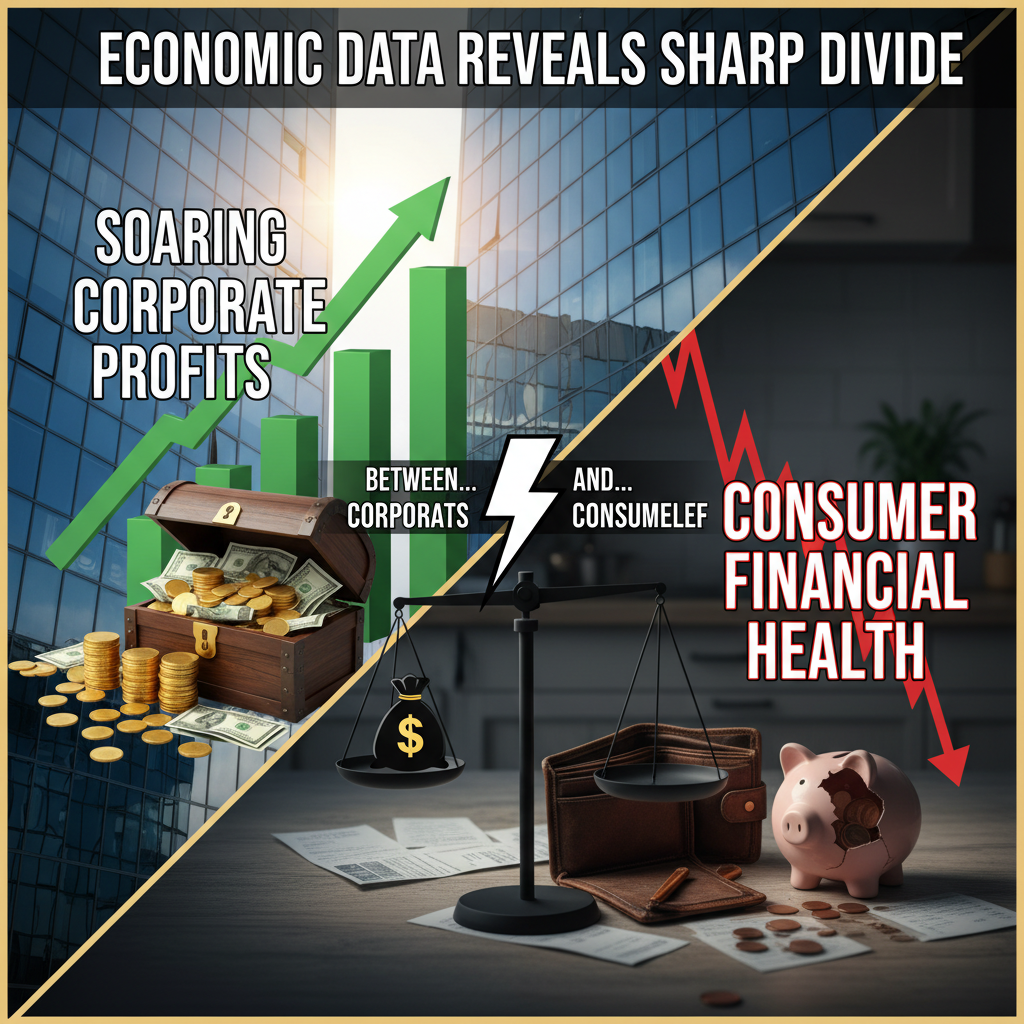
Economic Data Reveals Sharp Divide Between Soaring Corporate Profits and Consumer Financial Health
President Donald Trump celebrated a surging GDP at the World Economic Forum this week, the underlying data exposes a fragile reality for American households. While top-line growth figures impress investors, personal savings rates have plummeted to dangerous lows as families grapple with persistent inflation costs.
Post-Pandemic Volatility Sets Stage for Current Economic Debate
The current administration frequently characterizes the previous term as a period of stagnation, officials claim they inherited a "dead economy" plagued by stagflation. Statistical records present a more complex picture, the prior administration actually oversaw significant post-pandemic recovery with unemployment reaching historic lows despite the 2022 inflation spike. This disconnect between political rhetoric and economic baselines has intensified following recent aggressive trade policies, analysts now worry that the focus on "reindustrialization" might destabilize international alliances. The debate centers on whether current growth is sustainable or merely a sugar high driven by debt and speculation.
GDP Surges to Record Highs While Household Savings Plunge to Critical Levels
The latest figures paint a contradictory picture of the nation's financial health, the Gross Domestic Product expanded at an annualized rate of 4.4 percent in the third quarter of 2025. Projections from the Federal Reserve Bank of Atlanta suggest growth could reach 5.5 percent for the fourth quarter, this expansion is largely fueled by an artificial intelligence capital expenditure supercycle and optimism surrounding corporate tax cuts. Commerce Secretary Howard Lutnick has set an ambitious target of 6 percent growth by year-end, he ties this goal to deeper interest rate cuts and new legislative packages.
Consumer Reality Tells Different Story
Beneath the headline numbers lies significant distress, the personal saving rate has fallen to just 3.5 percent which marks a three-year low. Average families are spending roughly $1,600 more annually on essentials compared to 2024, persistent inflation in housing and utilities continues to erode purchasing power. The labor market has entered a period of stagnation characterized by low hiring volumes, December saw only 50,000 jobs added while the labor share of GDP dropped to levels unseen since 1947.
Middle Class Faces Squeeze as Inflation Threats Loom Over Future Growth
Financial experts warn that the divergence between Wall Street success and Main Street struggles could trigger a feedback loop of inflation, tariffs acting as consumption taxes may force the Federal Reserve to maintain higher interest rates. This dynamic threatens to exhaust remaining consumer savings buffers by late 2026, a scenario that could precipitate a sharp recession despite current stock market highs. Middle-income households remain most vulnerable to these shifting macro pressures as their financial safety nets evaporate.
Economists suggest the coming year will determine if the current expansion can broaden beyond the tech sector, policy makers face a critical test in balancing growth ambitions with price stability.