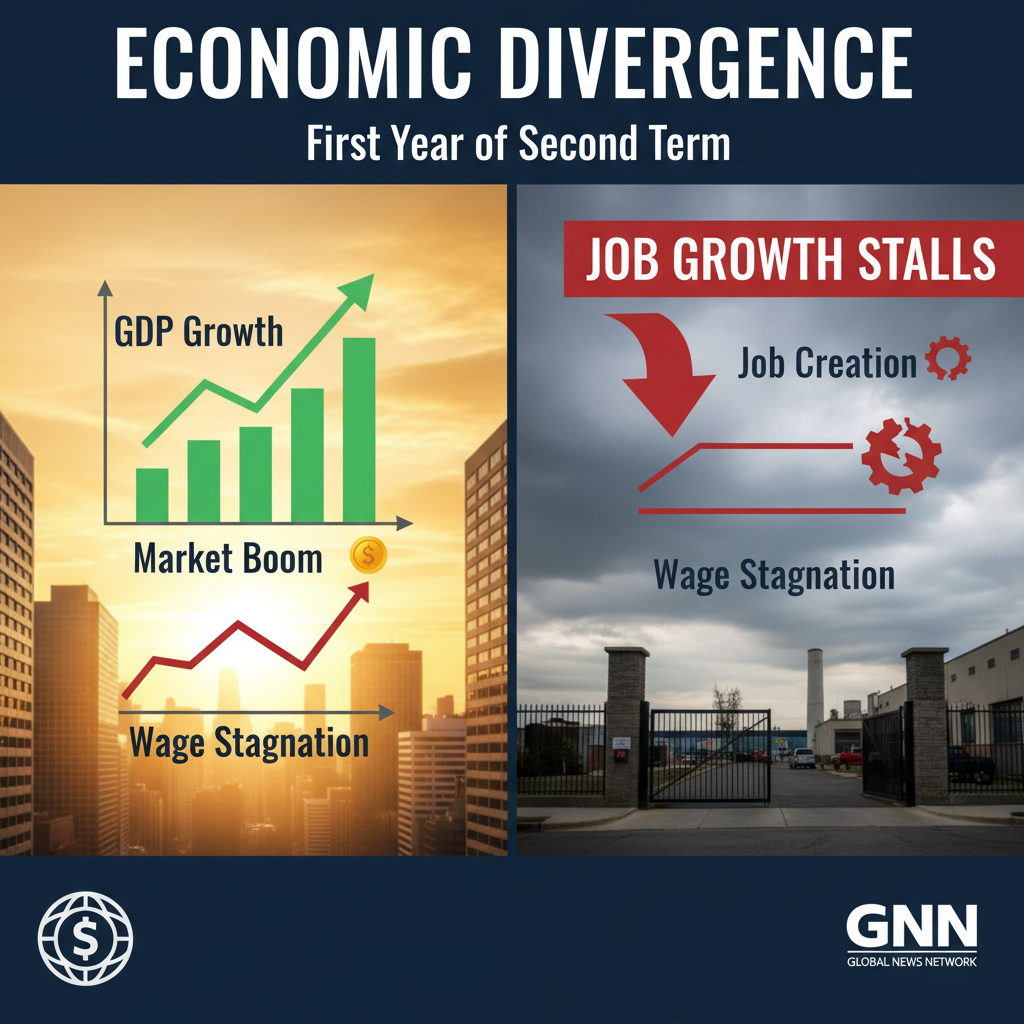
Economic Divergence Marks First Year of Second Term as Job Growth Stalls
A new economic paradox has emerged one year into Donald Trump's second term, data released on Saturday reveals a sharp divergence between rising stock markets and a stagnating labor market. The administration faces questions regarding "jobless growth," this trend combines record corporate profits with the slowest hiring rates seen in years.
2025 Economic Data Reveals Sharp Shift in Labor Dynamics
Official figures from the Bureau of Labor Statistics confirm a dramatic deceleration in hiring, the US economy added only 473,000 nonfarm jobs throughout 2025. This figure represents a massive decline from the 1.78 million positions created during the final year of the previous administration, the current landscape contrasts sharply with the "Blue-Collar Boom" of the president's first term. Analysts note that while GDP has grown, the labor market has softened significantly, this creates a climate where financial success does not necessarily equate to employment opportunities.
Federal Downsizing and Automation Drive Workforce Contraction
A central driver of this stagnation is the aggressive reduction of the federal payroll, the administration has eliminated approximately 277,000 government positions in a single year. This 9.2 percent reduction aligns with campaign promises to dismantle administrative structures, labor leaders including AFL-CIO President Liz Shuler have condemned the move as a historic act of union busting. Corporations are simultaneously leveraging artificial intelligence to replace entry level roles, this shift has allowed companies to boost productivity without increasing their headcount.
Market Gains Contrast With Hiring Slump
Traditional financial metrics remain positive despite the hiring freeze, the Gross Domestic Product grew by an estimated 1.8 percent while the S&P 500 continues to reach new highs. A critical tipping point has nevertheless arrived for workers, the number of unemployed individuals now exceeds available job openings for the first time in nearly four years. This inversion signals a shift in power away from employees, economists warn this dynamic often precedes broader recessionary risks.
Middle Class Workers Face Increasing Economic Precarity
The current economic model suggests a widening gap between investors and wage earners, private sector earnings have risen slightly but gains are concentrated in high skill industries. Tighter border policies have reduced refugee admissions by 98 percent, this creates severe labor shortages in agriculture and construction that could eventually drive up housing and food costs for consumers. Service workers and blue collar employees are largely being left behind by the current growth metrics, this results in a "K-shaped" economic reality.
Political analysts warn that declining consumer sentiment poses a risk for the GOP ahead of the 2026 midterm elections, voters may penalize the party if corporate growth fails to translate into tangible job security.