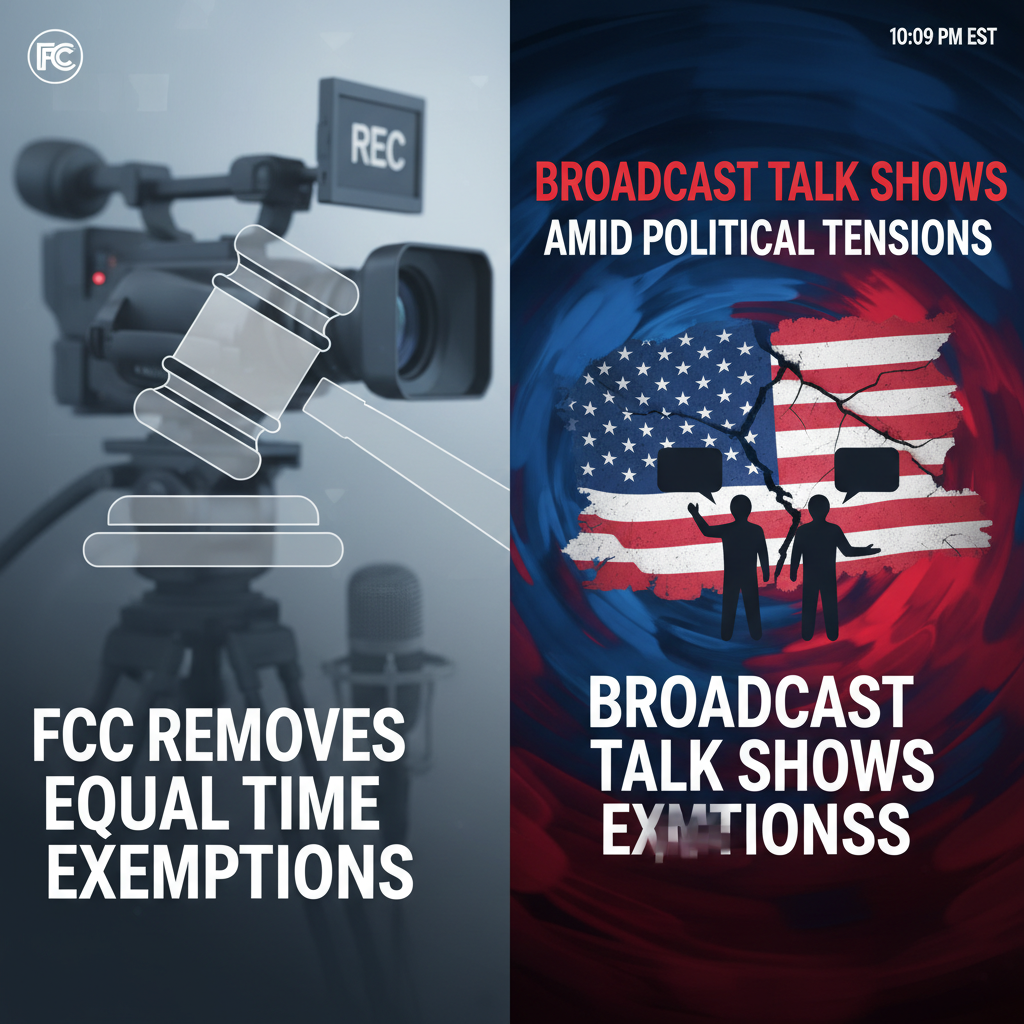
FCC Removes Equal Time Exemptions for Broadcast Talk Shows Amid Political Tensions
The Federal Communications Commission issued a public notice on January 21, it declares that broadcast talk shows no longer hold automatic exemptions from political equal time rules. This major regulatory shift targets programs like The View and late-night shows, Chairman Brendan Carr argues the change prevents partisan use of public airwaves.
Decades of Precedent Overturned by Regulatory Shift
The Communications Act of 1934 established equal opportunities for political candidates, Congress later added exemptions for news interviews in 1959 to protect journalistic freedom. A significant ruling in 2006 involving Jay Leno classified late-night interviews as bona fide news, this decision protected hosts from providing airtime to minor candidates for twenty years. President Donald Trump has frequently criticized these programs as partisan operations, he has suggested revoking network licenses in retaliation for critical coverage. FCC Chairman Brendan Carr, a Trump appointee, cited recent controversies involving host Jimmy Kimmel as justification to reevaluate these standards, he claims the agency lacks evidence that current shows qualify for news exemptions.
New Guidance Demands Case-by-Case Approval for Political Interviews
Under the new guidance issued by the commission, broadcast stations must now offer equal opportunities to all qualified candidates if they interview a politician on an entertainment program. The agency stated it will no longer assume talk shows meet the criteria for news interviews, broadcasters must now prove their eligibility on a case-by-case basis before airing content. The notice explicitly warns that programs motivated by partisan purposes will not qualify for protection, this places a heavy burden on networks like ABC and CBS to justify their editorial choices.
Opposition Voices Raise Free Speech Concerns
Commissioner Anna Gomez issued a strong dissent against the measure, she labeled the notice an escalation in a campaign to control speech and censor content. Late-night host Jimmy Kimmel described the move as a war on talk shows, he argues it constitutes a partisan attack on free speech principles. The policy affects broadcast television stations exclusively, it does not apply to cable channels or streaming platforms which operate under different rules. Networks now face a difficult choice between granting free airtime to fringe candidates or ceasing high-profile political interviews entirely.
Networks Face Logistical Hurdles and Legal Uncertainties
Major networks may stop hosting political guests to avoid complex compliance issues, this could effectively create politics-free zones on broadcast television during election cycles. Legal experts warn that local stations could face license challenges if they air controversial content, this grants the FCC significant leverage over editorial decisions. The rule creates a disparity between traditional broadcasters and cable outlets, the latter remain free to air partisan content without similar restrictions.
Constitutional scholars anticipate immediate challenges in federal court regarding the First Amendment, they predict a potential Supreme Court showdown over the agency's authority to define partisan content. The outcome will significantly shape the media landscape for the upcoming 2026 midterm elections.