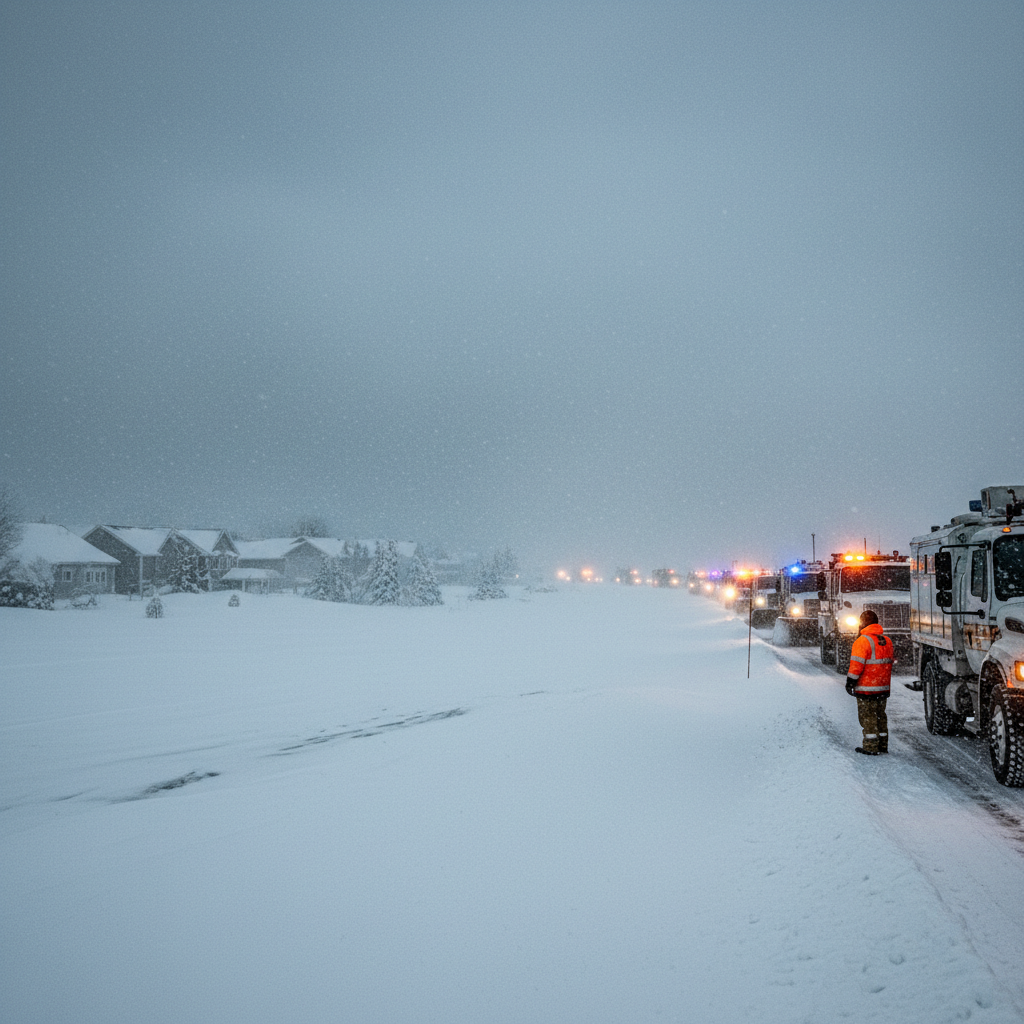
Historic Winter Storm Paralyzes US as FEMA Pauses Workforce Cuts to Manage Crisis
A massive weather system paralyzed large swaths of the United States on Sunday, the event affects approximately 230 million residents across the country. The storm delivers a dangerous combination of heavy snow and catastrophic ice, authorities describe it as a once-in-a-generation threat.
Comparisons to 1993 Superstorm Highlight Severity
Meteorologists compare this system to the historic "Storm of the Century" from 1993, the current weather event spans from the Texas Panhandle to New England. Experts warn of a "triple threat" scenario involving deep snow, thick ice accumulation, and arctic cold, this combination creates uniquely hazardous conditions. The sheer scale of the storm sets it apart, it covers nearly 70 percent of the population, this forces officials to deploy resources usually reserved for hurricanes. The system results from a stretched polar vortex, this phenomenon allows freezing Arctic air to spill deeply into southern latitudes.
Federal Agencies Halt Staffing Cuts to Address Emergency
The Department of Homeland Security took decisive action as the storm intensified, Secretary Kristi Noem labeled the event a major national crisis. FEMA halted planned terminations of hundreds of disaster workers, the agency requires full operational capacity to manage the unfolding disaster. This move pauses an ongoing debate regarding a significant reduction in the permanent workforce, officials prioritized immediate safety over fiscal adjustments. Nineteen states and Washington D.C. declared states of emergency, governors mobilized the National Guard to assist with rescue operations.
Forecasts predict up to two feet of snow in the Northeast, meanwhile southern states like Mississippi and Alabama brace for catastrophic ice accumulation capable of collapsing power grids. Scientists utilized AI-driven models and aircraft data to track the system, these tools helped refine predictions as wind chills dropped to minus 50 degrees in the Northern Plains. The storm places immense pressure on state leadership, they must coordinate plowing and emergency services across vast distances.
Key Infrastructure Faces Severe Strain
The accumulation of ice presents the most immediate danger to infrastructure, accumulations of just half an inch can snap power lines and topple trees. Crews across the South remain on high alert, they face difficult repair conditions due to the biting cold and impassable roads.
Millions Face Power Outages and Economic Disruption
Economic analysts estimate the daily cost of disruption at **$24 billion**, businesses across the affected region remain closed to ensure safety. Power grids face severe stress tests, over 130,000 customers in the South already lost electricity due to ice-heavy lines. While the Texas grid has shown resilience so far, infrastructure in other regions struggles under the weight of ice and extreme cold. The National Weather Service predicts sub-freezing temperatures will persist until early February, this prevents melting and keeps roads dangerous for days.
Officials urge residents to stay off roads while crews work to restore power, the recovery process will likely take weeks due to the lingering cold.