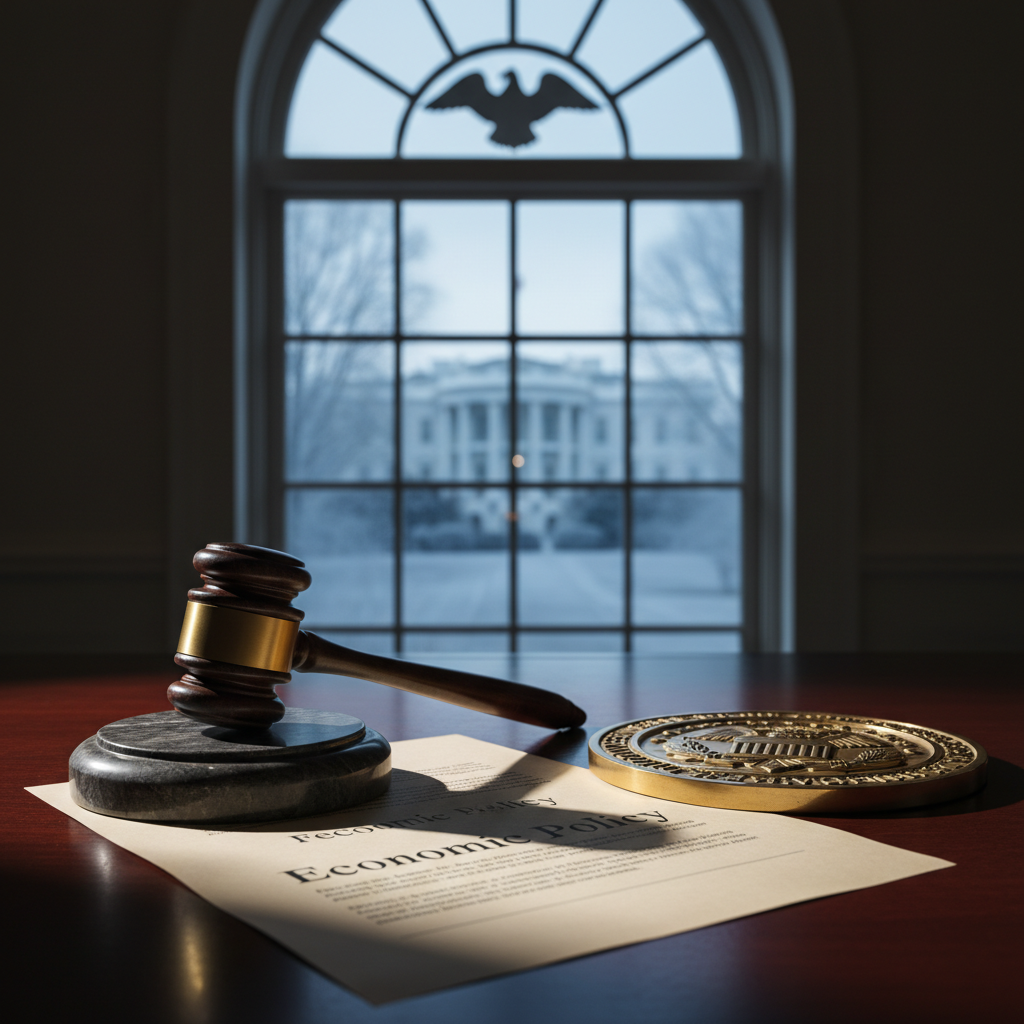
Rising Institutional Pressure Threatens to Erode President Trump's Control Over Economic Policy
New economic analysis suggests President Donald Trump's dominance over fiscal policy is waning as 2026 begins, former advisers warn that the era of unilateral executive action is ending, institutional powers like the Supreme Court and Federal Reserve are expected to reassert their authority against the White House.
2025 Executive Orders and Tariff Strategies Set Stage for Conflict
The administration spent much of the previous year governing through direct action rather than legislative consensus, this period culminated in the controversial "Liberation Day" declaration on April 2, 2025. President Trump utilized the International Emergency Economic Powers Act to impose sweeping trade restrictions, these measures included a 10 percent baseline tax and reciprocal rates reaching 50 percent on specific nations. The national economy subsequently heated up with fourth-quarter growth hitting 5.4 percent, this rapid expansion occurred alongside persistent inflation concerns that continue to worry policymakers despite a reduction in the trade deficit.
Market Sentiment Shifts as Investors Adapt to Policy Volatility
Wall Street has adapted to the administration's volatility through a specific trading strategy known as "TACO," this acronym stands for "Trump Always Chickens Out" and reflects a growing belief among investors that presidential threats will eventually soften to prevent market crashes. Financial analysts observe that traders now buy stocks during policy scares, they operate under the assumption that the White House will retreat from its most aggressive stances when faced with economic turbulence. The focus of power is simultaneously migrating away from the Oval Office toward structural battles, the Supreme Court is preparing to rule on the legality of using emergency powers for trade disputes, lower courts have already vacated several 2025 tariff orders by ruling that the executive branch overreached its statutory authority.
Federal Reserve Independence Under Scrutiny
Attention also turns to the Federal Reserve as a primary battleground for economic control, current Chair Jerome Powell's term concludes in May 2026. The nomination of his successor represents a critical test of the central bank's independence, the Senate's scrutiny of the nominee will likely serve as a referendum on the President’s ability to influence monetary policy.
Legislative and Judicial Checks Create New Uncertainty for Administration
A judicial ruling against the administration could dismantle the reciprocal trade framework overnight, this would force a rapid and chaotic adjustment in international commerce. Congress is simultaneously signaling a desire to reclaim its constitutional authority over taxation and spending, lawmakers appear less willing to follow the White House's fiscal lead compared to the previous year. Economists warn that this emerging gridlock increases the risk of policy paralysis, a lack of unified direction during an inflationary surge could leave the nation vulnerable to economic stagnation while political branches fight for dominance.
The coming months will determine if the executive branch can maintain its grip on financial levers, the outcome of pending legal challenges will likely define the economic trajectory for the remainder of the presidential term.