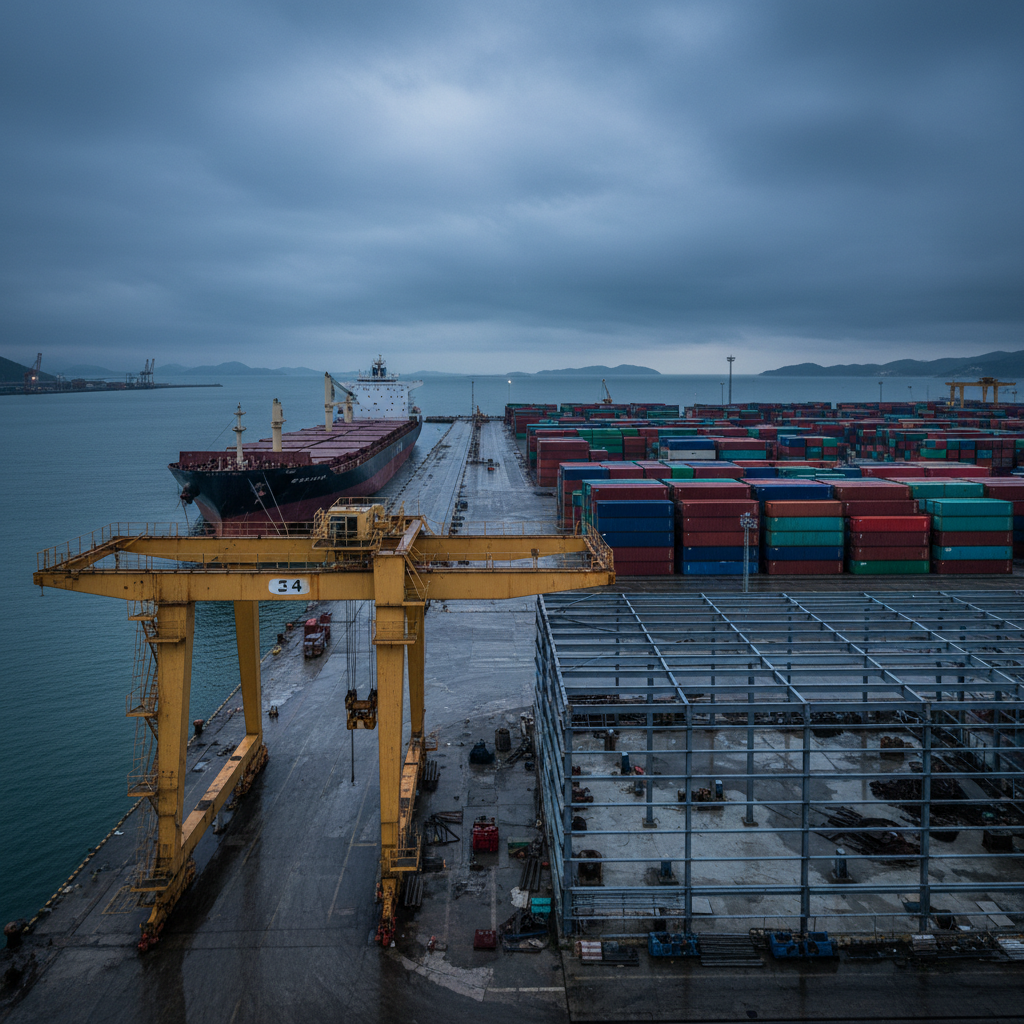
South Korea Economic Output Shrinks 0.3% in Final Quarter as Construction and Exports Falter
South Korea’s economy unexpectedly contracted by 0.3% in the final quarter of 2025, the sharpest quarterly decline in three years, as a deepening slump in the construction sector combined with faltering exports to drag down overall performance according to central bank data released Tuesday.
Reliance on Semiconductors Masks Broader Structural Weaknesses
The headline figure of 1.5% year-on-year growth disguises a fragile reality for Asia’s fourth-largest economy. South Korea has become increasingly dependent on its semiconductor industry to prop up Gross Domestic Product (GDP) figures, creating a "one-engine" economy vulnerable to global shifts. This economic fragility comes on the heels of significant political turbulence in late 2024 involving former President Yoon Suk Yeol, which triggered capital flight and severely damaged domestic business confidence throughout 2025. The full-year growth of just 1.0% represents the slowest expansion since the onset of the COVID-19 pandemic, signaling a potential long-term descent toward a structural low-growth phase.
Construction Sector Plunge Drives Worst Quarterly Performance Since 2022
Data indicates that the 0.3% quarterly contraction was primarily fueled by a massive 3.9% drop in construction investment. This sector is facing its worst crisis since the 1998 Asian Financial Crisis, high interest rates and project financing failures have crippled builders across the nation. The crisis in real estate development has created a ripple effect that is stifling broader domestic demand.
Exports also faltered in the final months of the year, falling 2.1% despite strong global demand for artificial intelligence technology. While semiconductor giants like Samsung provided some buoyancy, they could not offset sharp declines in automobiles, machinery, and transport equipment. Manufacturing output dropped by 1.5% during the period, reflecting a broad-based cooling of industrial activity outside the niche chip sector. Private consumption remained largely stagnant with only 0.3% growth, households continue to grapple with high debt levels and lingering economic uncertainty.
Policymakers Face Difficult Choice Between Stimulus and Stability
The Lee Jae-myung administration now faces immense pressure to prevent a structural recession in 2026. Government officials have proposed increasing fiscal expenditure by over 8% to stimulate activity, yet the Bank of Korea remains constrained by currency volatility. Governor Rhee Chang-yong has prioritized stabilizing the won over aggressive rate cuts, leaving the construction industry without immediate monetary relief. Experts warn that without a recovery in the real estate market, the country risks a prolonged period of low growth projected at just 1.8% for the coming year.
Analysts expect deep-tech and robotics investments may offer a path forward, but the immediate outlook requires navigating a dangerous debt crisis in the property sector before broader stability returns.