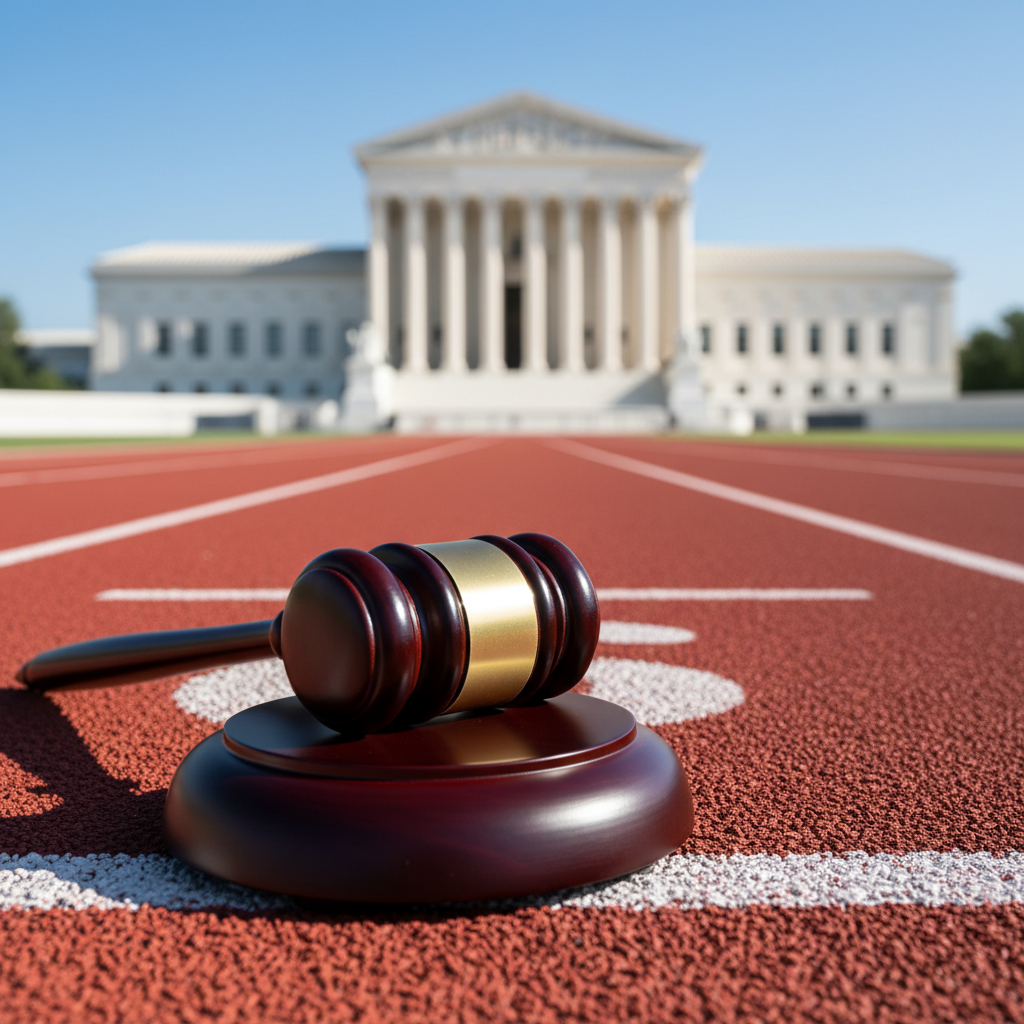
Supreme Court Set to Decide Future of Transgender Athletes in Women’s Sports
The United States Supreme Court is preparing to hear pivotal arguments regarding transgender athletes in women's sports during the 2025-2026 term, this legal showdown follows a wave of state restrictions and a recent executive order, the decision will determine if bans in dozens of states violate constitutional rights.
Decades of Policy Evolution Lead to High Court Battle
The foundation of this legal conflict rests on Title IX, this 1972 law was originally designed to ensure equal education access but it became the bedrock of female athletics, policy interpretations have shifted dramatically over fifty years. An early precedent was set in 1977 when Renée Richards won the right to compete professionally, however recent years have seen a reversal in inclusion trends following the 2022 NCAA swimming championships. International bodies like World Aquatics have moved toward strict biological categories, this momentum emboldened state legislatures to enact restrictive measures starting in Idaho in 2020.
Supreme Court Reviews Bans in West Virginia and Idaho
Two major cases are now before the nation's highest court, West Virginia v. B.P.J. and Little v. Hecox challenge laws that bar transgender women from female sports categories. These lawsuits center on plaintiffs like Becky Pepper-Jackson who argue that exclusion violates their civil rights, opposition groups represented by the Alliance Defending Freedom counter that biological sex is the only fair metric for competition. The legal landscape intensified in early 2025 when President Trump signed an executive order, this directive orders federal agencies to define Title IX based strictly on biological assignment.
Debate Centers on Medical Science and Fairness
Central to these arguments is a scientific dispute over physical advantage, medical experts for the defense claim that male puberty confers lasting performance benefits even after hormone suppression. Advocates for inclusion point to data showing performance declines after transition, they argue that banning participation harms the mental health of vulnerable youth. At least 29 states now enforce such bans, this creates a patchwork of regulations that the Supreme Court must resolve.
Ruling Could Redefine Federal Protections and Privacy Standards
A decision favoring state bans would fundamentally redefine how federal law interprets sex, this could limit protections to biological assignment at birth across all education sectors. Critics warn that enforcement may require invasive sex verification testing for all female athletes, such procedures raise significant privacy concerns for every student. Researchers emphasize that exclusion from sports exacerbates social isolation, this is particularly dangerous for a demographic already facing high rates of depression.
Legal analysts expect the conservative majority on the court to uphold the restrictions, this outcome would likely establish a uniform national standard for school sports eligibility by 2026.