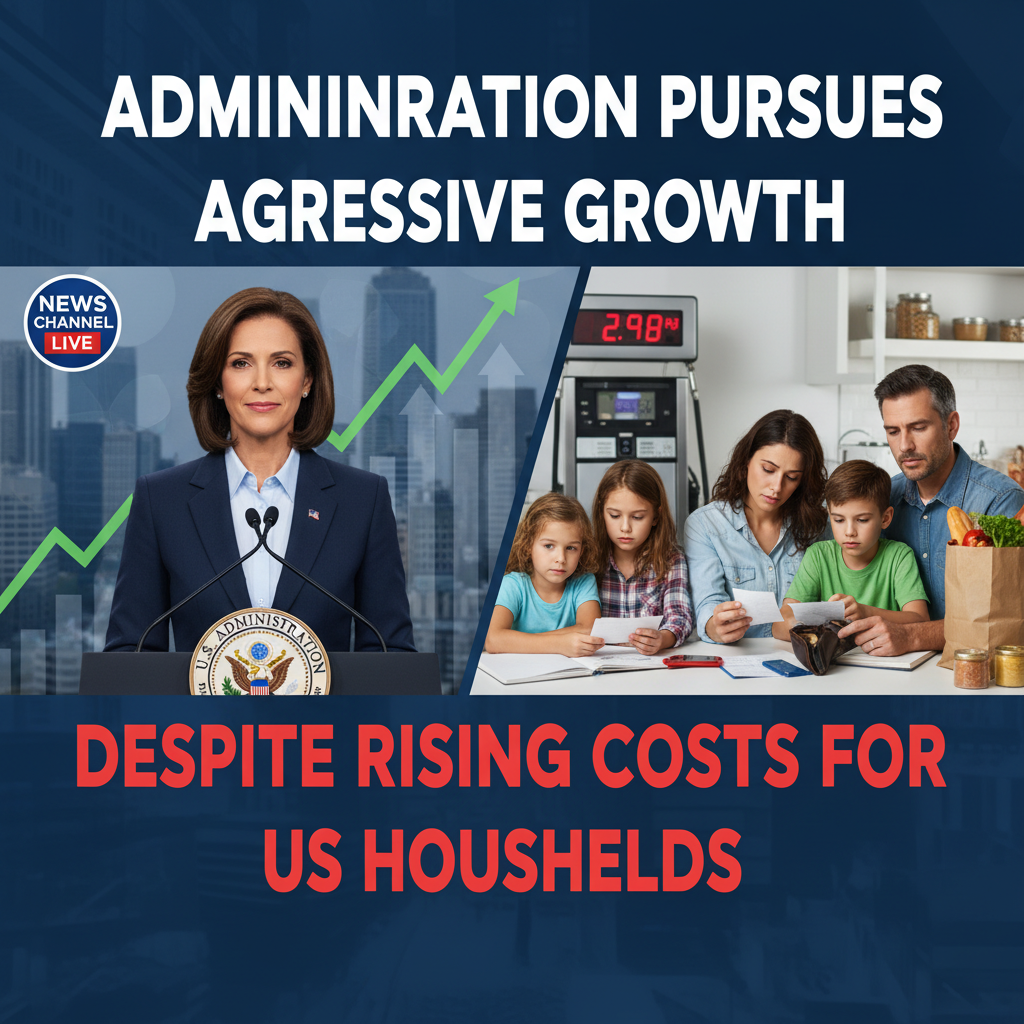
Administration Pursues Aggressive Growth Strategy Despite Rising Costs For US Households
The Trump administration officially shifted to a high growth economic model in January 2026, this strategy prioritizes massive deregulation and tax cuts over price stability. Officials aim to boost GDP above 4 percent through aggressive spending, yet economists warn this approach shifts financial burdens directly onto American families through sustained inflation.
Decades of Stable Prices End as Policy Shifts
Economists observe a sharp departure from the stable price trends that defined the last forty years, the current administration explicitly rejects previous caution regarding national debt. Analysts compare this aggressive fiscal approach to the volatile 1970s, that era saw political pressure on central banks lead to runaway prices. The White House now argues that rapid expansion can outpace ballooning deficits, this theory relies on maintaining high consumer spending despite rising prices. Critics note that the era of cheap imported goods has ended, this reality makes the current inflationary pressure more dangerous than previous economic cycles.
New Fiscal Plan Targets High Growth Through Tax Cuts
Treasury Secretary Scott Bessent is spearheading the effort to prioritize expansion at any cost, the plan includes a universal tariff of 10 to 20 percent on imports. A new tax package recently slashed the corporate rate to 15 percent for domestic manufacturers, this move aims to stimulate local production despite the federal deficit currently sitting at 6 percent. President Trump continues to challenge Federal Reserve leadership, he demands lower interest rates to fuel liquidity even during non recessionary periods. These measures collectively push the economy to operate at maximum capacity, officials accept higher inflation as a necessary compromise for these gains.
Tariffs and Trade Tensions Rise
Trade barriers remain a central pillar of this economic overhaul, specific levies now target European allies and Chinese goods. The administration recently threatened duties on nations like Denmark to leverage geopolitical goals, these actions have triggered retaliatory measures from global partners. The United States now imposes a 60 percent tariff on products from China, this policy significantly raises costs for businesses that rely on international supply chains.
American Families Face Erosion of Purchasing Power
Consumers bear the brunt of this aggressive strategy through a phenomenon known as the inflation tax, the cost of living continues to climb. Household savings lose value as inflation settles into a new baseline of 3 to 4 percent, real wages struggle to keep pace with daily expenses. The housing market faces prolonged strain due to high borrowing costs, families find mortgages increasingly unaffordable while credit card debt creates additional financial drag. Experts estimate that households absorb nearly 80 percent of the costs associated with new tariffs, energy prices alone surged over 7 percent in the last year.
Markets expect continued volatility as the administration appoints new monetary officials in the coming months. Financial experts advise caution, the future success of this experiment remains uncertain amid rising global economic tensions.