Bitter Cold Temperatures Trigger Loud Frost Quakes and Splitting Trunks in Vulnerable Hardwood Trees
Residents across freezing regions are reporting loud cracks resembling gunshots, this phenomenon is actually caused by trees reacting to plummeting temperatures. The sound results from sap freezing inside trunks, the pressure builds until the wood splits open in a distinct biological event.
Science Behind Frost Cracks Reveals Vulnerability During Rapid Temperature Drops
Trees contain significant amounts of moisture within their trunks, this liquid is vital for their survival during warmer months. Winter brings a specific danger known as frost cracking, this occurs when mercury levels drop drastically in a short time frame. The outer bark cools and contracts faster than the inner wood, the sap inside creates internal pressure as it freezes. This tension requires release, nature solves the problem through a physical split in the wood. The process is similar to a water pipe bursting in an unheated basement, the expansion of ice forces the container to give way. While the term exploding is dramatic, the physics behind the event represent a violent release of built up hydraulic pressure.
Hardwood Species Face Highest Risk of Structural Damage From Freezing Sap
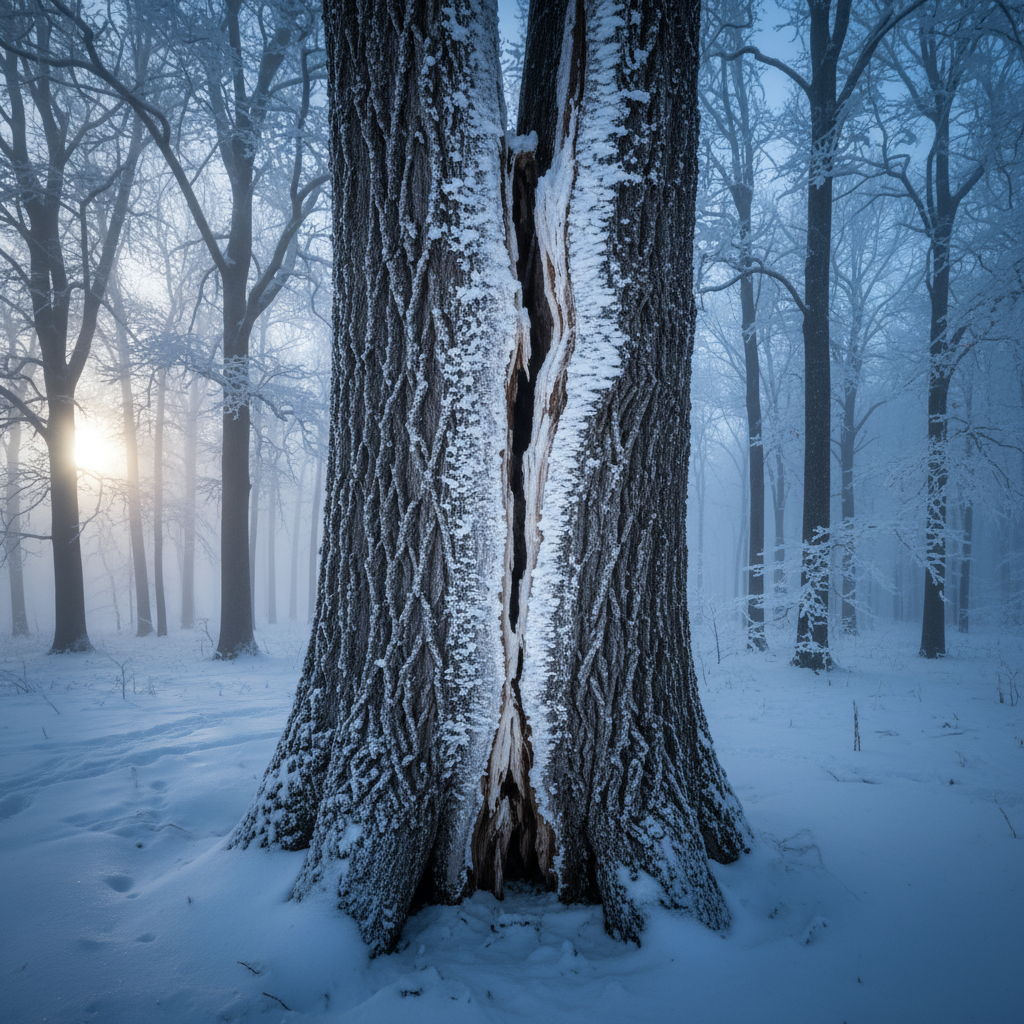
Reports often describe the noise as sounding like a gunshot or fireworks, the volume is loud enough to startle residents indoors. Hardwood species are the most susceptible to this weather event, maples and oaks frequently suffer from these vertical fissures. The cracks usually appear on the south or southwest side of the trunk, the sun warms these areas during the day before the temperature crashes at night. This specific type of damage is permanent, the tree will attempt to heal over the wound in spring. A related phenomenon called a cryoseism involves soil freezing and cracking, this also generates loud booming noises during polar vortex events. The combination of splitting timber and shifting earth creates a noisy environment during deep freezes. Biologists note that thin barked trees suffer the most, their lack of insulation allows the cold to penetrate the core rapidly. The resulting split can run several feet up the length of the trunk, the visual evidence is unmistakable against the dark bark.
Homeowners Advised to Monitor Fractured Trees for Long Term Decay Issues
Most trees survive these explosive events, the crack creates a vulnerability for insects and diseases to enter later. Property owners should monitor damaged trunks, wrapping the area can sometimes help the healing process. While the noise is frightening, the immediate danger to people is low, the structural integrity of the tree remains intact in most cases. Decay fungi may exploit the opening over several years, this can eventually weaken the timber.
Meteorologists predict continued cold patterns this week, residents may hear more popping sounds in wooded areas. Experts recommend leaving established trees alone unless the damage appears to compromise major limbs.