Police Arrest 86 Demonstrators After Major Security Breach at HMP Wormwood Scrubs
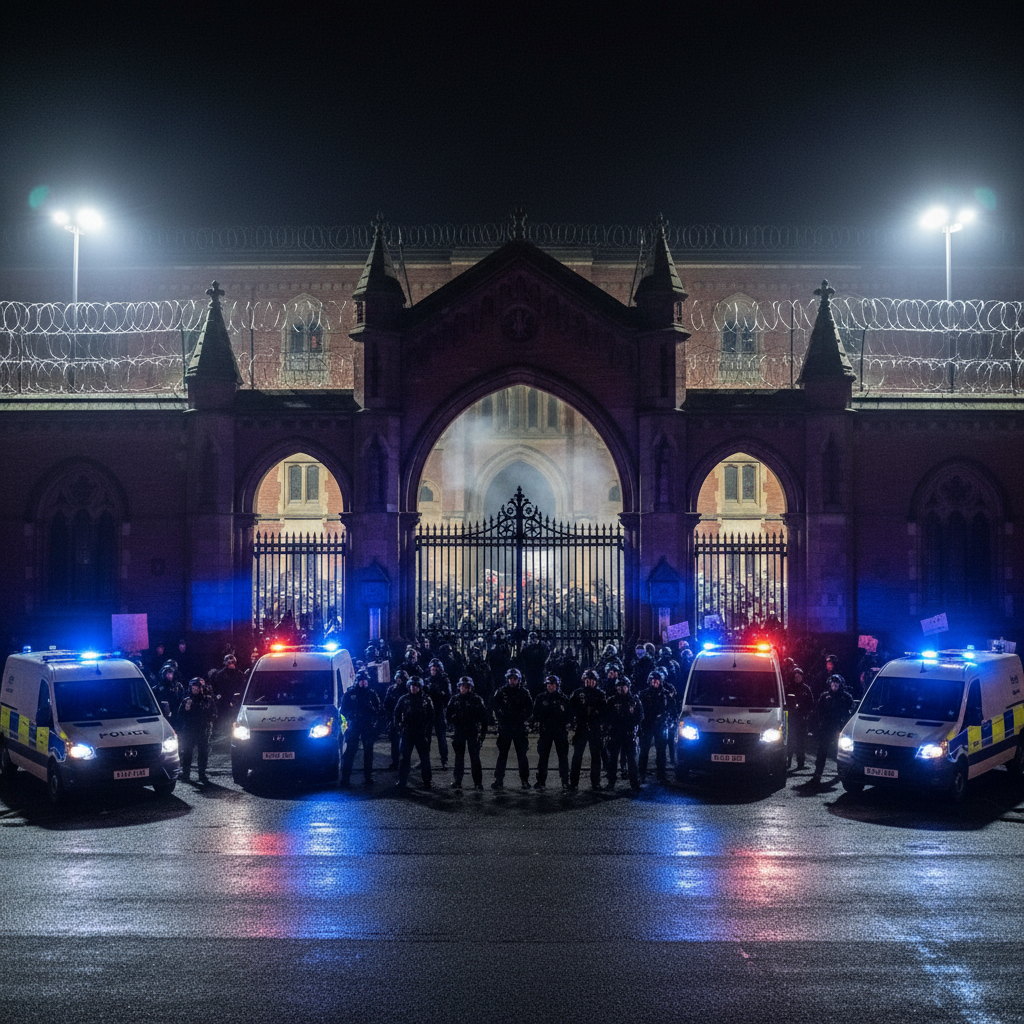
Metropolitan Police officers arrested 86 individuals on Saturday evening after a large group of demonstrators breached the grounds of HMP Wormwood Scrubs in West London, the incident occurred as activists gathered to support a remand prisoner currently on a thirst strike.
2025 Terrorism Designation Sets Stage for Prison Standoff
The confrontation is the latest escalation following the government's decision to ban Palestine Action under the Terrorism Act in July 2025, Home Secretary Yvette Cooper justified the proscription by citing the group's aggressive tactics against national infrastructure. Tensions have mounted specifically around the detention of Muhammad Umer Khalid, a 22-year-old activist awaiting trial for allegedly causing £7 million in damages to military aircraft at RAF Brize Norton. Khalid has been in custody since June 2025 and recently escalated his hunger strike to refuse water, his trial is not scheduled to begin until January 2027. This prolonged remand period has fueled repeated protests, supporters argue his treatment and the ban on the organization represent a significant overreach of state power.
Protesters Breach Perimeter Prompting 86 Arrests at Wormwood Scrubs
Disorder broke out on Saturday night when demonstrators successfully penetrated the outer grounds of the Category B prison, police reports indicate that the group blocked staff entrances and issued threats against officers on the scene. The situation became critical as several individuals managed to enter a staff access area within a prison building, this breach required immediate and robust intervention from law enforcement teams. Authorities subsequently detained 86 people on suspicion of aggravated trespass and for displaying support for a proscribed organization, the group "Prisoners for Palestine" stated the action was a necessary response to Khalid's deteriorating health.
A Ministry of Justice spokesperson condemned the incident as completely unacceptable, they emphasized that while peaceful protest is permitted the safety of staff remains paramount. Officials confirmed that the core prison security was not fully compromised during the disturbance, however the ease with which protesters entered the grounds raises serious questions about perimeter defense. The use of the Terrorism Act 2000 to process the arrestees highlights the severe legal consequences now facing those who publicly align with the banned group.
Legal Battles and Security Protocols Face Immediate Scrutiny
This breach suggests a radical shift in tactics as activists now target penal institutions directly, the Metropolitan Police are expected to implement stricter exclusion zones around London prisons to prevent similar incursions. Legal experts warn that these arrests will further complicate the ongoing debate regarding civil liberties, the UN Human Rights Chief has previously criticized the UK's application of terrorism laws to protest groups. Khalid's medical crisis places immense pressure on the Prison Service, his continued refusal of fluids creates a complex ethical and logistical challenge for detention staff.
Lawyers representing the banned organization are currently appealing the proscription order in the Court of Appeal, a successful challenge could invalidate hundreds of recent arrests while a loss may lead to even harsher policing strategies.