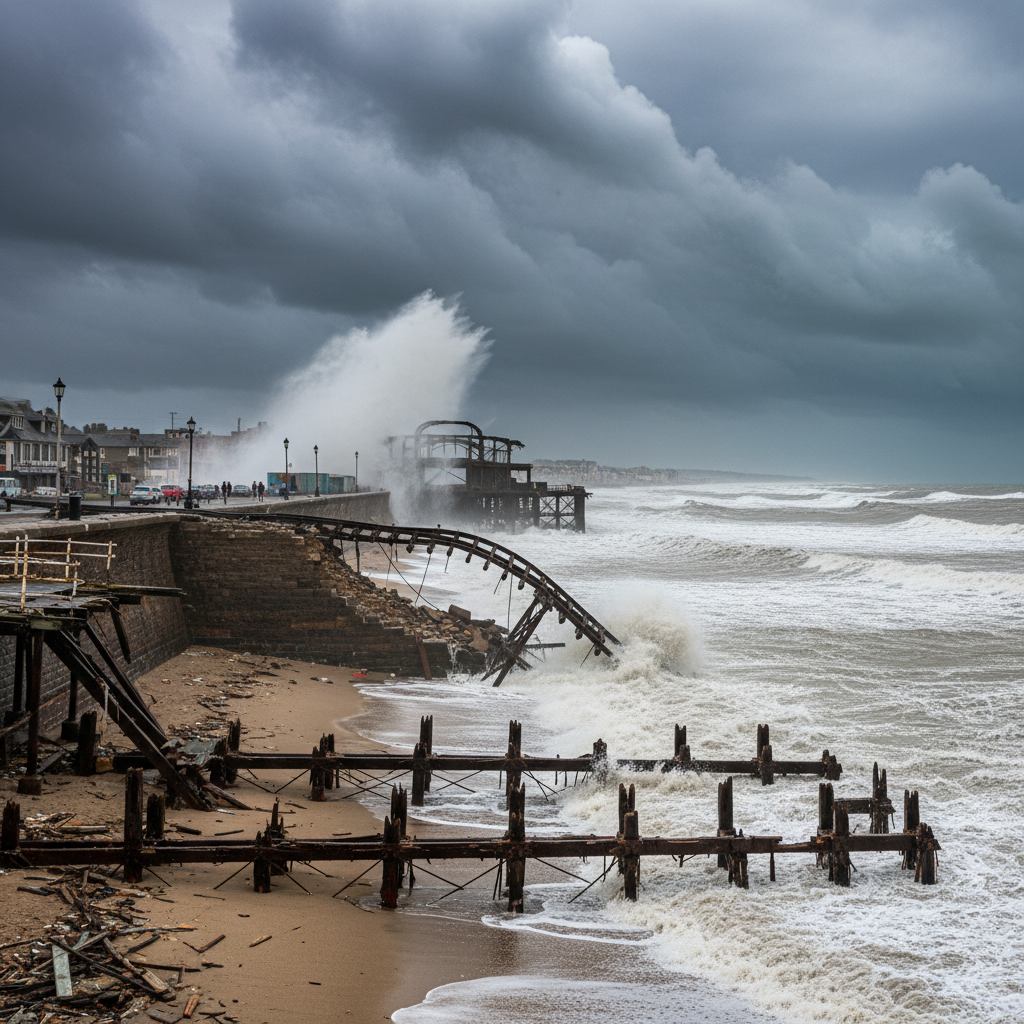
Storm Ingrid Destroys Historic Teignmouth Pier Section and Severs Key Rail Link
Severe weather battered the South West coast on Saturday morning as Storm Ingrid caused the partial collapse of the historic Teignmouth Grand Pier. The intense system also destroyed a significant portion of the sea wall at nearby Dawlish, forcing the immediate suspension of major rail services between Exeter and Plymouth.
Victorian Landmark Has Faced Decades of Environmental Stress
The Grade II-listed pier has served as a focal point for the seaside town since its construction in 1867. Designed by Joseph Wilson, the structure survived intentional partial dismantling during World War II, yet it has faced increasing peril from modern climate patterns. The site previously suffered catastrophic damage during storms in 2014, requiring expensive repairs to stay open. This weekend proved too much for the aging iron supports, a high tide of nearly 4.5 meters combined with 60mph gusts to overwhelm the defenses. Local officials noted that previous installations of steel baffles failed to stop the specific force of this surge.
Surge Causes Structural Collapse and Breaches Railway Defenses
Witnesses reported the seaward end of the pier simply disappearing into the ocean around 9:40 AM on Saturday. The National Coastwatch Institution described the sea conditions as unprecedentedly rough, the waves tore the iron pilings from the seabed. Debris from the shattered structure drifted nearly a mile down the coast toward Dawlish, creating hazards for other coastal areas.
The storm simultaneously breached the critical infrastructure protecting the railway line. Approximately 90 feet of the sea wall crumbled under the force of the waves, leaving the tracks exposed and vulnerable. This breach severed the vital artery connecting the region, halting GWR and CrossCountry trains immediately. Network Rail has mobilized emergency teams to assess the damage, but the timeline for restoring service remains unclear.
Owners Confront Massive Rebuilding Challenge
The Brenner family, who have owned the pier for three generations, now faces a difficult path forward. Since the structure is a private commercial enterprise, it does not easily qualify for the government heritage grants available to public sites. This complicates any potential restoration efforts for the lost section.
Private Owners and Commuters Face Immediate Economic Fallout
The destruction poses a serious threat to the local tourism economy, Mayor Cate Williams expressed the community's heartbreak regarding the loss of this focal point. Local businesses are bracing for a difficult season if safety inspections force the remaining arcade section to close. Additionally, thousands of commuters face significant travel disruptions while engineers attempt emergency repairs on the rail line. The event has reignited debates about who should fund coastal defenses for private heritage assets.
Officials are currently focusing on clearing hazardous debris from the water to protect shipping lanes. Engineers warn that such extreme weather events may become more frequent, necessitating a complete review of coastal resilience plans across the region.