Record US Debt and German Recovery Signal Major Shifts in Global Economic Landscape
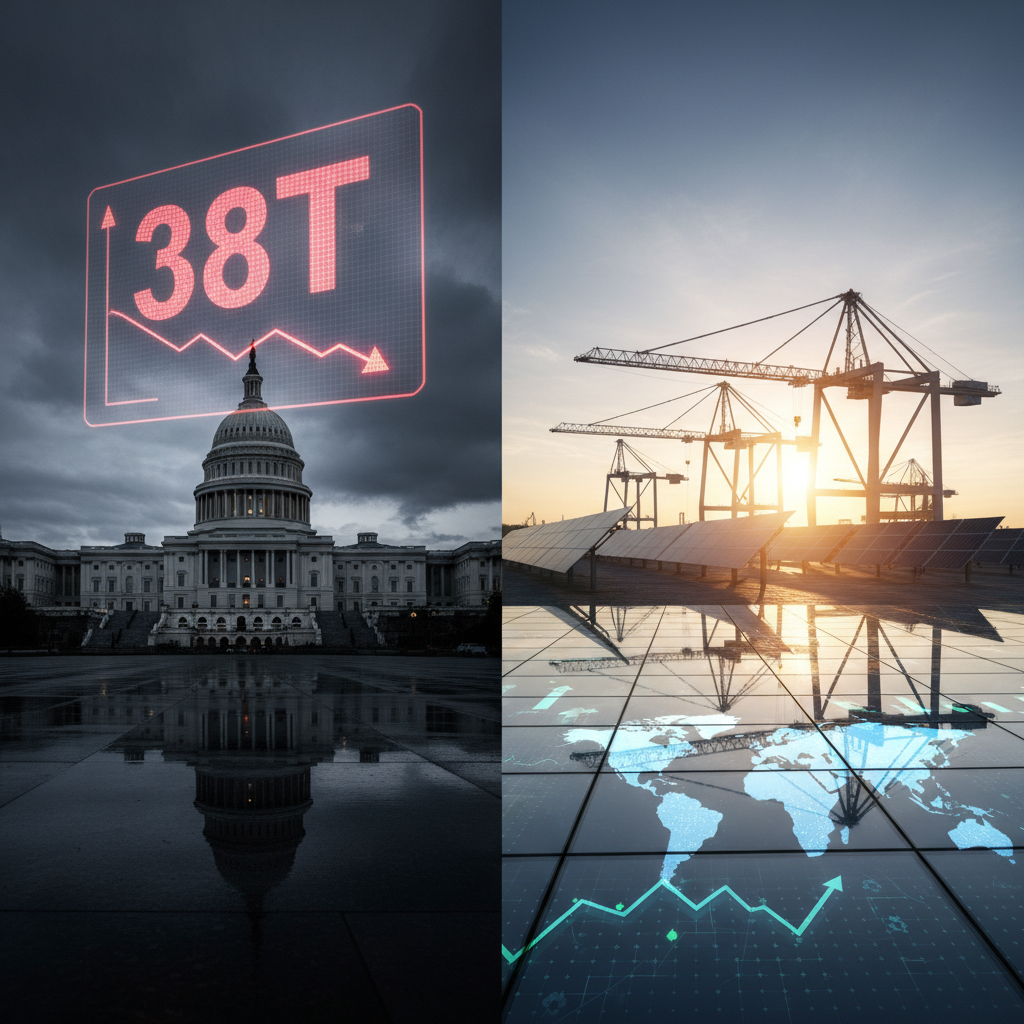
A critical economic outlook released on Wednesday highlights a precarious financial future for the United States, the national debt has surged to a record $38 trillion, this massive liability creates a scenario where annual interest payments now exceed the entire defense budget for the first time in history.
Decades of Spending Habits Converge with New Crises
Economists are raising alarms about a phenomenon known as fiscal dominance, this situation occurs when a government's need to finance debt forces central banks to abandon inflation targets, the current economic environment mirrors pressures not seen since World War II. The United States has relied on deficit spending to fuel growth for years, the Federal Reserve now faces the difficult task of managing interest rates while the government borrows heavily, this creates a conflict between controlling prices and keeping the treasury solvent. Germany is also shifting its strategy after years of stagnation, the nation recently altered its constitution to allow for increased borrowing, this marks a departure from its traditional austerity to address infrastructure needs following the 2022 energy shock.
Major Powers Diverge on Fiscal and Trade Strategies
China reported a massive $1.2 trillion trade surplus for 2025, the government has simultaneously launched an initiative to curb price wars in sectors like solar panels and steel, this campaign aims to prioritize corporate margins over raw export volume. The United States is seeing the full impact of the "One Big Beautiful Bill Act" which was signed in July 2025, this legislation permanently extended tax cuts and introduced new deductions for tipped wages, these measures are fueling a projected 2.5 percent growth rate but significantly adding to the deficit. Germany is projected to grow by 0.9 percent in 2026 after three years of zero growth, this recovery is largely driven by a surge in defense spending and structural investment, the country is effectively moving toward a wartime economy footing.
Bond Markets and Global Trade Face Uncertainty
Investors in US Treasuries now hold significant power over the global economy, a loss of confidence in American debt could send long term interest rates soaring regardless of central bank policies, this would effectively end the era of cheap borrowing. Trade tensions are likely to escalate as China continues to export its excess capacity, nations like Brazil and Mexico are considering tariffs to protect their domestic industries, consumers globally may face higher prices as protectionism becomes more common.
Policymakers must now balance growth against inflation risks, the potential for stagflation could trigger a recession by 2027 if deficits continue to climb, economic stability depends heavily on market confidence in the coming months.