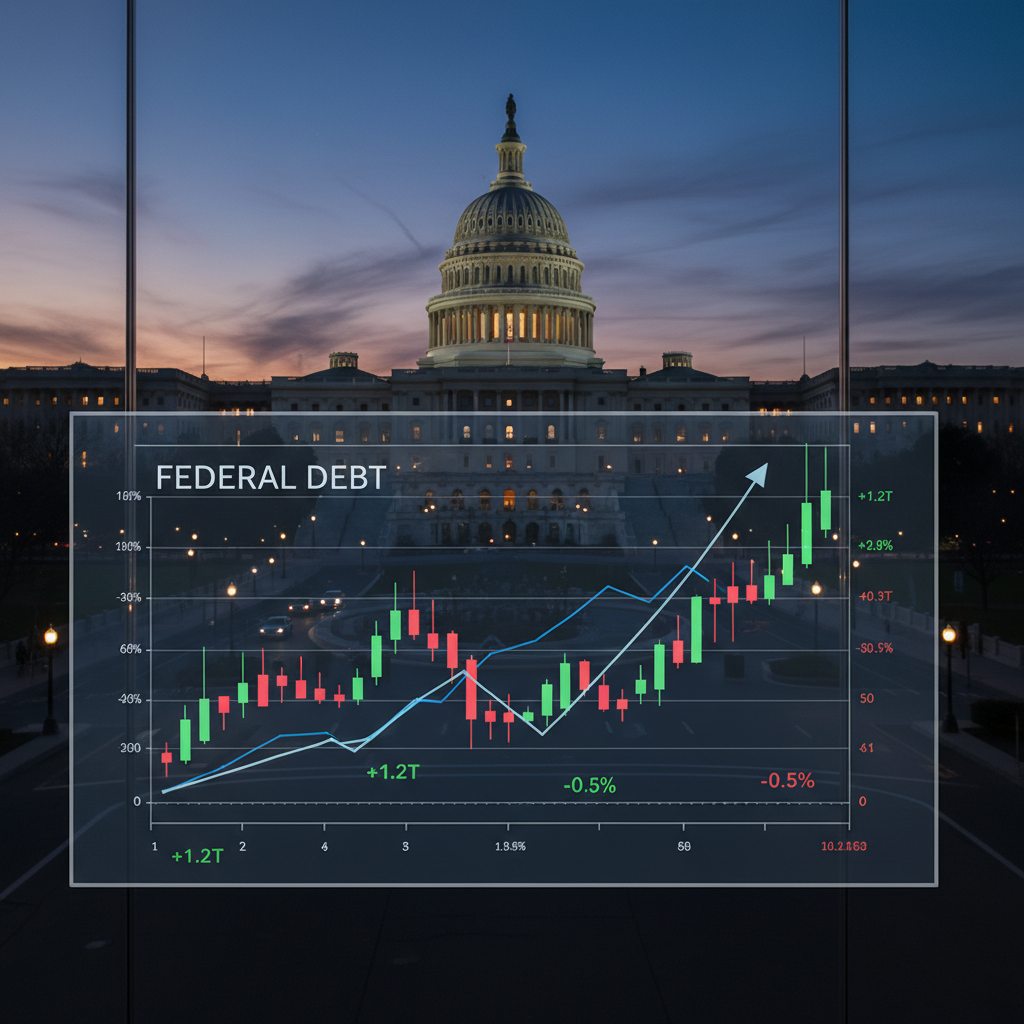
Federal Debt Climbs as Economy Rebounds with Mixed Inflation Signals in 2026
New economic data released on Monday outlines a complex shift in the American financial landscape, analysts project a modest rebound following the volatility of 2025, persistent inflation and rising federal debt threaten to dampen these gains for average households.
Tariff Aftermath Sets Stage for Complex Recovery
The previous year saw aggressive tariff policies create a significant drag on national growth, this created widespread market uncertainty across multiple sectors, the current outlook marks a transition away from those immediate shocks into an adjustment phase, the probability of a recession has dropped to 30 percent according to recent models, this signals a tentative stabilization as industries adapt to the new trade environment.
Historical trends suggest this period mirrors the post-2019 global shifts, markets are now pricing in a new normal involving permanently higher trade taxes, the focus has shifted toward managing long-term stability rather than reacting to immediate policy disruptions, economic experts note that while the threat of an immediate downturn has receded, the underlying structural challenges remain significant.
Report Forecasts Growth Driven by AI and Deficit Spending
The latest forecast predicts Gross Domestic Product growth hitting 2.2 percent for the year, this expansion is largely fueled by massive investments in artificial intelligence infrastructure, updates to the national energy grid are also driving industrial activity, unemployment is expected to tick upward to 4.5 percent as companies end post-pandemic labor hoarding practices, this data points to a reacceleration of the economy despite lingering headwinds.
Surging Debt Levels Challenge Long Term Stability
A critical finding involves the trajectory of the national deficit, the government is currently borrowing approximately $7 billion daily, this aggressive spending pushes the annual deficit near $2 trillion, economists warn that high borrowing costs will keep long-term interest rates elevated, this occurs even as the Federal Reserve is expected to cut short-term rates to 3 percent by the end of the year, the primary deficit now sits at roughly 3.78 percent of the total economy.
Middle Market and Consumers Face Rising Cost Pressures
Businesses in the middle market stand to gain from recent deregulation efforts, they still face higher capital costs due to the rising global price of money, the outlook is more difficult for everyday consumers, real wage growth is currently stuck below 1 percent, this creates an ongoing affordability crisis that disproportionately impacts lower and middle-income households.
The era of low-cost financing appears to be officially over, experts suggest that balancing fiscal expansion with inflation control remains the central challenge for the coming year, officials urge caution as global financing costs continue to rise.